Signature dish · Wok noodles
Char Kway Teow in Arlington Heights: Penang’s Smoky Wok-Fried Noodles
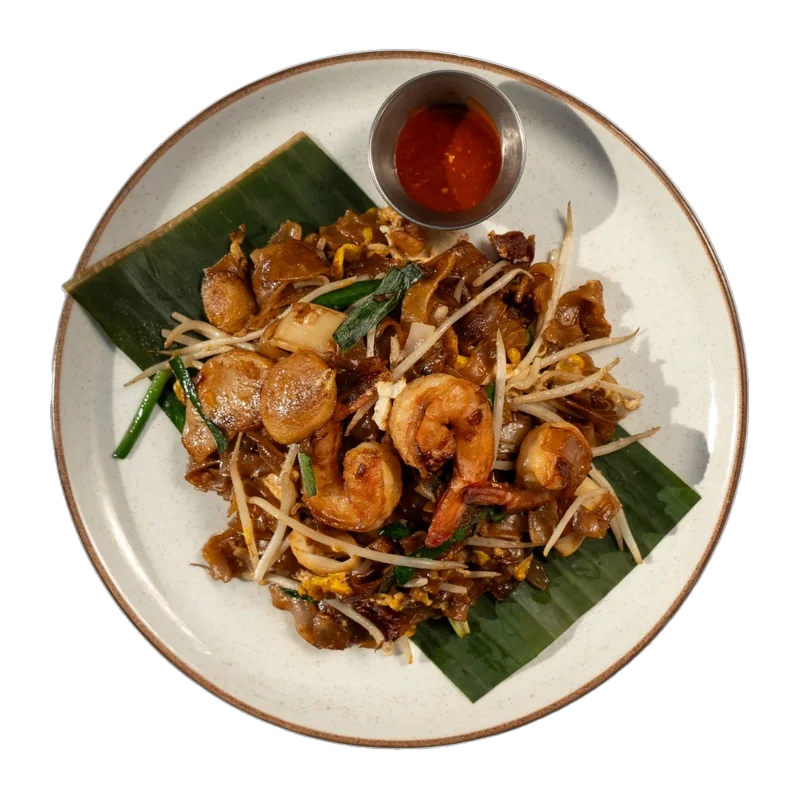
Ask anyone from Penang what to eat first and the answer is usually char kway teow. It is the island’s most famous hawker plate: flat rice noodles tossed in a blazing-hot wok until they turn smoky, glossy and a little charred at the edges. At Penang Malaysian Cuisine on West Algonquin Road, it is our house signature, cooked by Chef Song, who has been stir-frying char kway teow for more than 35 years.
What is char kway teow?
The name tells you most of the story. In Hokkien and Teochew, the dialects spoken by many Chinese families in Penang, char means stir-fried and kway teow means flat rice noodles. Put together, char kway teow is a plate of wide, silky rice noodles stir-fried at very high heat with seafood, egg, bean sprouts and Chinese chives in a savory soy-based sauce with a kick of chili.
It is not a sweet noodle dish and it is not saucy. A good plate is almost dry, with every strand lightly coated and slightly caramelized, and a deep, smoky aroma that hits you before the plate reaches the table.
Where the dish comes from
Char kway teow is usually traced to Teochew Chinese immigrants in Malaya and Singapore. It began as cheap, filling food for laborers and fishermen: inexpensive noodles stretched with whatever seafood was plentiful, cooked fast and served hot. Over the generations it moved from roadside stalls to the hawker centers of George Town, where it became the dish Penang is known for around the world.
Penang-style char kway teow has its own reputation even within Malaysia. It tends to be cooked one plate at a time, so each portion gets the full heat of the wok, and it is often finished with prawns, cockles and a duck egg for extra richness.
Wok hei: the flavor you can’t fake
The quality that separates a great plate from an ordinary one is wok hei, often translated as “the breath of the wok.” It is the smoky, slightly charred flavor that only comes from tossing food in a very hot wok over a powerful flame. The noodles sear rather than steam, the sauce caramelizes on contact, and a faint smokiness carries through every bite.
Wok hei cannot be added later and it does not travel well in a slow kitchen. It depends on heat, speed and timing, which is why we cook every order of char kway teow fresh, right when you order it.
Meet Chef Song: 35 years at the wok
Every plate of char kway teow at Penang is cooked by Chef Song, who has been stir-frying char kway teow for more than 35 years. That kind of experience is what this dish demands. Char kway teow is cooked in seconds, not minutes, and the difference between smoky and burnt, or glossy and soggy, comes down to feel: how hot the wok is, when the noodles go in, and when to toss.
After three and a half decades at the wok, Chef Song cooks it by instinct. It is the reason char kway teow is our house signature.
How we make char kway teow at Penang
Our version follows the Penang hawker style. Flat rice noodles are seared over roaring heat with shrimp and squid, then tossed with bean sprouts, Chinese chives, egg and our spicy soy sauce until the noodles are smoky and glossy. The result is bold and savory with a gentle chili heat, balanced by the crunch of fresh bean sprouts.
- On the menu: Char Kway Teow, Wok Noodle section
- Price: $15.95 with regular egg · $17.50 with duck egg (before tax)
- What’s in it: flat rice noodles, shrimp, squid, bean sprouts, chives, egg, spicy soy sauce
- Make it bigger: add shrimp (+$5.00) or add a pan-fried egg (+$2.00)
If you have allergies or want to adjust the dish, tell us when you order and we will let you know what we can do.
Regular egg or duck egg?
In Penang, many hawkers offer char kway teow with a duck egg, and plenty of locals will not order it any other way. Duck eggs have a larger, richer yolk than chicken eggs. In the wok, that richness coats the noodles and gives the dish a deeper, silkier finish.
Our standard plate uses a regular egg. For the full Penang experience, choose the duck egg for $17.50. If it is your first time, we recommend trying the duck egg at least once.
What to order with it
Char kway teow is a complete meal on its own, but it is even better shared. A few favorites from our menu that pair well with it:
- Homemade Roti Canai ($7.50): flaky flatbread with curry dipping sauce, an easy starter for the table.
- Satay Chicken ($14.95): lemongrass-marinated skewers with peanut sauce.
- Penang Har Mee ($15.95): if you want a second Penang classic, this spicy shrimp noodle soup is a good contrast to dry wok noodles.
- Malaysian Style Iced Tea or Teh Tarik ($6.95): sweet, creamy and the classic way to cool down the chili.
Try our char kway teow
Visit us at 1720 West Algonquin Rd, Arlington Heights, IL 60005, or order online for pickup or delivery. Ordering direct supports a local business.
Char kway teow FAQ
What does char kway teow taste like?
Smoky, savory and slightly spicy. The flat rice noodles are soft with crisp, caramelized edges, and the soy-based sauce gives a deep umami flavor balanced by fresh bean sprouts and chives.
Is char kway teow spicy?
It has a gentle chili heat from the spicy soy sauce. It is flavorful rather than fiery. Let us know when you order if you have a question about spice.
What is the difference between char kway teow and pad see ew?
Both use wide rice noodles, but they come from different cuisines. Char kway teow is Malaysian and Singaporean, cooked with seafood, bean sprouts, chives and a spicy soy sauce for a smoky, savory flavor. Pad see ew is Thai, usually made with Chinese broccoli and a sweeter soy sauce.
Where can I get char kway teow near Chicago?
Penang Malaysian Cuisine at 1720 West Algonquin Rd in Arlington Heights serves char kway teow every day we are open. We are closed on Tuesdays.
Who cooks the char kway teow at Penang?
Chef Song, who has been stir-frying char kway teow for more than 35 years.
How much is the char kway teow at Penang?
$15.95 with a regular egg, or $17.50 with a duck egg, before tax.
Can I order char kway teow for pickup or delivery?
Yes. Order online on our ordering page for pickup or delivery, call 847-222-1888, or build your order on our website and send it to us on WhatsApp.